
[vc_row][vc_column][vc_column_text css=””]
“Our genealogies make us whole; it’s an unbroken chain of stories and practices.” (1)
This quote stood out to me as I sifted through articles on Indigenous and Black ethical frameworks. I couldn’t help but stop and reflect on what Emancipation truly means to me and for us as a nation, and region. What does it mean to be free in a system where so many of our choices, especially food, are still shaped by colonial legacies.
Since the days of colonization, T&T’s food system has been controlled by design. Foods such as salted codfish and pickled pork were imported from other countries. While these foods were innovatively used to develop the unique dishes we know and love today, the preference for foreign foods was set before independence. Today, the remnants of that system lingers in supermarkets, stacked with imported and processed foods, matched by a staggering chronic disease burden.

On August 1st, Trinidad and Tobago commemorated African Emancipation Day, honoring the memory and traditions of enslaved Africans, and what they have contributed to the breadth and depth of our islands. Yet in 2025, a deep reflection of Emancipation, considers the current systems we live under, the land we live on and the foods we depend on. The right to grow and decide what we eat, on our own terms, is a freedom we have yet to fully claim.
Emancipation equates freedom, even in this current world. Freedom can be extended to what we eat, what’s being offered and at what cost. And by cost, I’m not only referring to the cost in the supermarket. There’s hidden costs we, as consumers, don’t see: the labor of farmers, the pressures of policies governing the food systems and the long-term health consequences of the food choices.
Today, Trinidad and Tobago imports 80% of its food, a statistic that is almost hard to believe and realistically unsustainable for a small island like ours. Despite calls to “buy local”, the current food environment we live in is designed to make local food less convenient than its imported, ultra-processed alternatives. This heavy reliance on imported foods leaves T&T highly vulnerable to price shocks and supply chain disruptions in the market, resulting in an expensive grocery bill for consumers to pay. In addition, aggressive marketing tactics, amplified by social media, have normalized the consumption of high sodium products, and sugar-sweetened beverages, at the expense of local fruits and vegetables. These subtle yet powerful forces create a system of dependency that make freedom of food choice a far cry from reality.

At a glance, the recently imposed tariffs on Trinidad and Tobago’s exports may just seem like distant macro-economic policy, but in fact, it is deeply connected to what we consume on our plates, especially in a country where our foods are deeply tied to imports.
Tariffs on exports could mean that T&T has reduced competitiveness in the US market, potentially reducing the country’s ability to earn foreign exchange (forex). These exports provide a critical source of forex which is used to support the country’s 7.4 billion dollar food import bill (2). Due to the precarious nature of the country’s forex issue, everyday foods such as potatoes, saltfish, rice, flour and oil can become scarcer and more expensive for the average households.
This isn’t just an economic issue, but a stark reminder of the global dependency dynamic that still exists in this country, and how vulnerable we are to these type of shocks. Not to mention the islands’ amplified vulnerability due the climate change effects, but this is a story for another day.
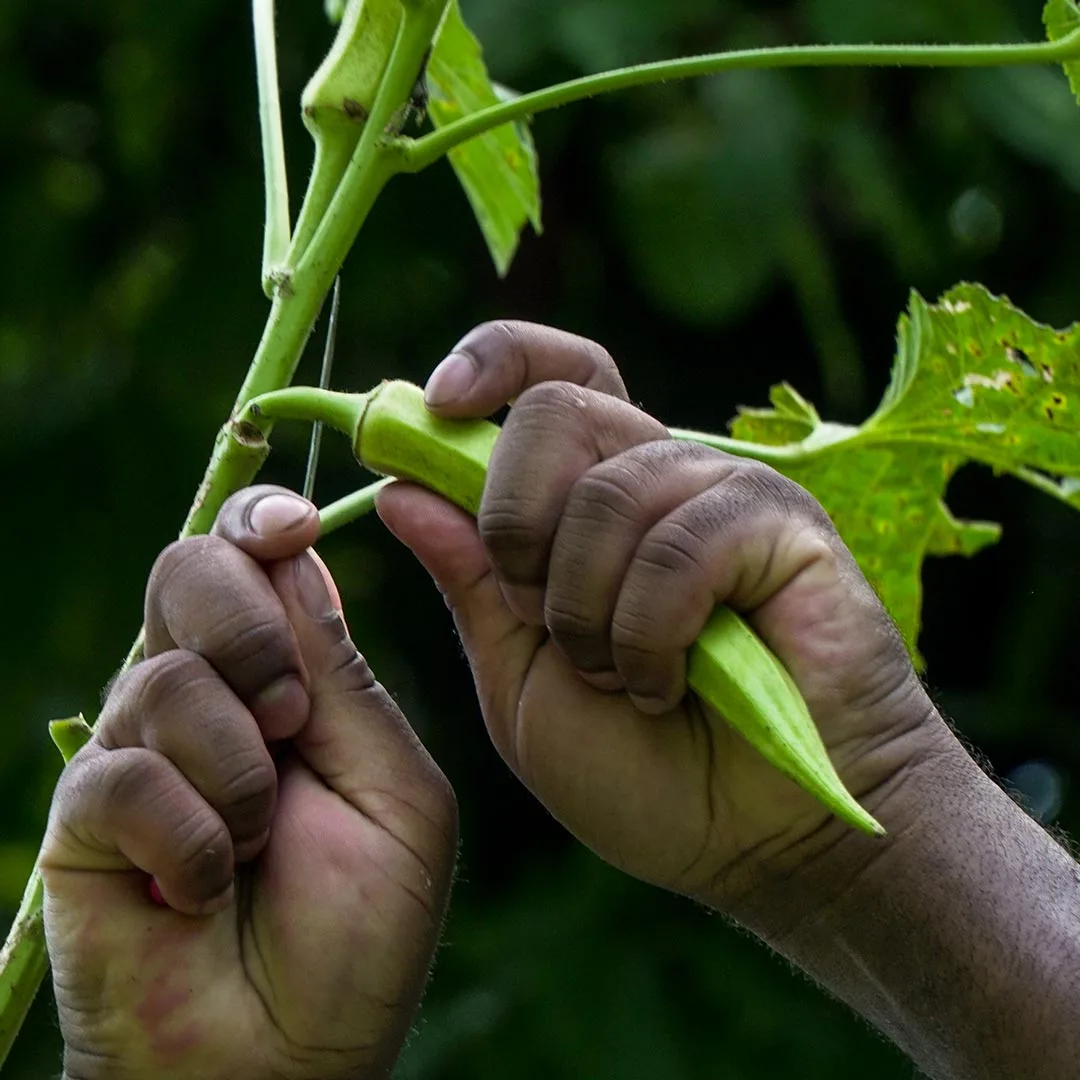
Where does that leave us? One possibility is food sovereignty. This term was first coined by an international movement La Via Campensina, and goes beyond food accessibility and availability, but rather, it is centered on empowering communities by reconnecting the relationship between people and the land (3). In simpler terms, communities have the freedom to decide what they grow, and what they eat, while promoting and protecting the environment.

Although this may seem like something that’s unattainable, T&T has had glimpses of what a food sustainable system could look like. One of my favorite examples is WHYFarm founded by the Alpha Sennon. Alpha and his team developed AGRIman, the world’s first agriculture superhero, and infuse culture and technology as a form of ‘agri-edutainment’ to engage audiences on the importance of sustainable agriculture. This is imperative as WHYFarm inspires future farmers, and empowers communities with the knowledge and tools to grow their own food. Another example of this power shift is the Culinary Medicine Park, established in 2021 by the South West Regional Health Authority(4). It features a hydroponic garden farm that supplies fresh produce to the hospitals’ dietary services. There are also numerous community gardens and school garden programs around the country that reinforce the possibilities of growing our own food.

Ultimately, emancipation is more than remembering slavery, but actively working to continuously empower ourselves, individually, interpersonally and collectively.
While food sovereignty may seem like a big issue that you have little control over, we can take small steps to move towards a healthier nation. Supporting local farmers, advocating for or joining a community garden project, or simply learning from our elders. These acts ensure that our chain of memory and resistance is not broken.
Food is more than just sustenance—it is a vessel of story, survival, and sovereignty. Reclaiming it means we get closer to a truer emancipation.
References:
1. Odom S, Jackson P, Derauf D, Inada MK, Aoki AH. Pilinahā: An Indigenous Framework for Health. Current Developments in Nutrition. 2019;3:32-38. doi:10.1093/cdn/nzz001
2. T&T food import bill highest ever at $7.3B. T&T Food Import Bill Highest Ever at $7.3B – Trinidad Guardian. https://www.guardian.co.tt/news/tt-food-import-bill-highest-ever-at-73b-6.2.2127409.c88a7fcd2a. Published October 6, 2024.
3. Food Sovereignty | USFSA. https://usfoodsovereigntyalliance.org/what-is-food-sovereignty/
4. Fraser N. SWRHA launches medicine “food park” in San Fernando – Trinidad and Tobago Newsday. Trinidad and Tobago Newsday. Published March 26, 2021. https://newsday.co.tt/2021/03/25/swrha-launches-medicine-food-park-in-san-fernando/
[/vc_column_text][/vc_column][/vc_row]

Leave a Reply